
Summary
Understanding the nursing home vs. senior living community difference helps families identify the right level of care for their loved one. Skilled nursing communities serve people with complex medical needs, while senior living communities offer residential environments with personal support services.
- Nursing homes provide ongoing medical supervision, medication management, wound care, and rehabilitation services for people with complex health conditions
- Senior living communities focus on assisting with daily routines like bathing and meals while offering dining programs, social activities, and apartment homes
- The choice depends on medical needs: skilled nursing is appropriate for frequent medical interventions, complex treatments, or intensive monitoring
- Needing help with everyday tasks doesn't automatically require nursing home care—many needs can be met in Assisted Living settings
- When deciding between options, evaluate your parent's current medical requirements, preferred daily environment, available services, and future care flexibility
When considering support for an older adult, understanding the nursing home vs. senior living community difference can make the decision feel more manageable. These terms are sometimes used interchangeably, but they describe different environments and levels of available support. Nursing homes generally provide skilled nursing services for people with complex medical needs, while senior living communities offer residential living with varying levels of personal support.
Knowing the difference between a nursing home and assisted living can help families focus on what their loved one actually needs, from assistance with everyday routines to ongoing skilled nursing services.
Understanding Nursing Homes and Skilled Nursing
Nursing homes, also called skilled nursing communities, generally serve people who require ongoing medical supervision or specialized nursing services. Depending on individual needs, services may include:
- Medication administration and management
- Wound care or other skilled nursing services
- Rehabilitation following surgery, hospitalization or serious illness
- Ongoing monitoring of complex medical conditions
Some people enter skilled nursing for short-term rehabilitation before returning home or moving to another setting. Others may need long-term skilled nursing because their medical needs require services that cannot be provided in a residential senior living environment or at home.
If you are wondering when you need a nursing home, start by discussing your parent’s medical needs with their healthcare provider. The decision should be based on consideration of the level of skilled nursing required rather than age alone.
Exploring Senior Living Community Options
The other side of the nursing home vs. senior community comparison is residential senior living. These communities typically focus on helping residents with everyday routines while providing opportunities for community connection, dining options that respect personal preferences, and engaging programs.
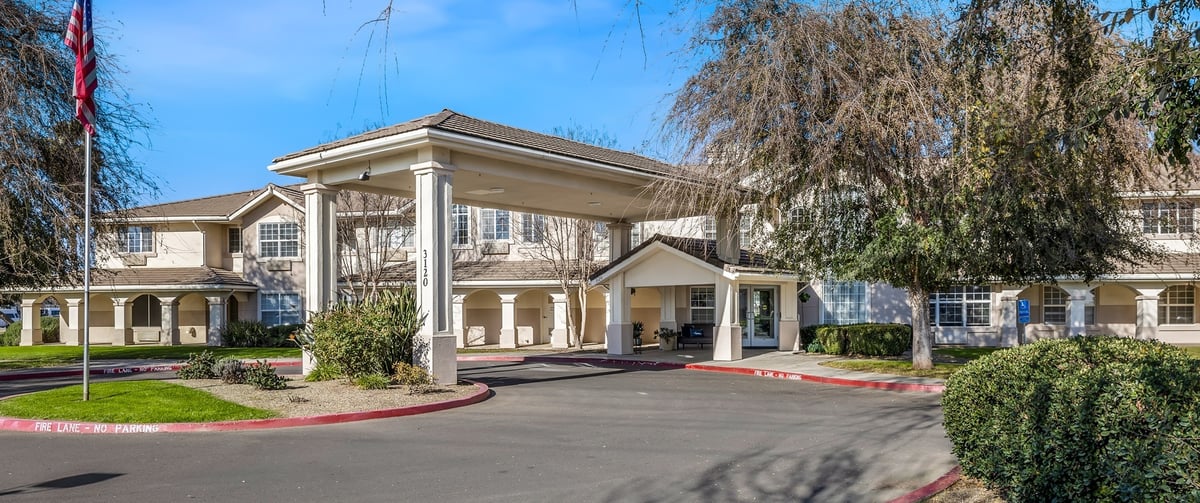
At Marbella Visalia, Assisted Living provides support with daily tasks such as bathing and medication management. Residents also have access to services and amenities designed to simplify everyday routines, including:
- Vibrant Life® programs and optional outings based on residents’ interests and preferences
- Elevate® Dining with freshly prepared meals and familiar home-style favorites
- Housekeeping, apartment maintenance, and scheduled transportation
- Private apartment homes and shared community spaces
These features create a residential experience rather than one organized primarily around skilled nursing services. Associates are available to provide personalized assistance while residents continue following familiar routines.
For people living with Alzheimer’s disease or another form of dementia, Marbella Visalia also offers Generations Memory Care®, a person-centered program focused on recognizing each resident as an individual rather than defining them by a diagnosis.
Comparing Daily Life and Support
The nursing home versus senior living distinction often becomes clearer when you consider what everyday life looks like.
Skilled nursing generally centers daily routines around medical needs, nursing services, and rehabilitation when appropriate. A senior living community typically offers a more residential schedule, with personal assistance incorporated into everyday life.
For example, residents of Marbella Visalia Assisted Living can receive help with daily tasks while also enjoying freshly-prepared meals, engaging community programs, and convenient personalized services. Vibrant Life® offers opportunities for connection and optional outings, while Elevate® Dining provides meals in a comfortable community dining setting.
When Is Skilled Nursing the Better Fit?
The question of when you need a nursing home depends largely on whether someone requires ongoing skilled medical services that cannot be provided in an assisted living setting.
Skilled nursing may be appropriate when a person needs:
- Frequent skilled nursing interventions or medical monitoring
- Complex wound management or certain medical treatments
- Rehabilitation following a significant illness, injury, or surgery
- Medical services beyond what a senior living community is licensed to provide
Needing help with bathing, dressing, meals, or medication management does not automatically mean someone requires skilled nursing. Those daily needs may be supported in assisted living, depending on the individual and the community’s available services.
Assisted Living or Nursing Home for a Parent?
Deciding between assisted living or a nursing home for a parent starts with understanding their current needs. If your parent primarily needs help with everyday routines, meals, housekeeping or medication management, assisted living may be worth exploring. If they require ongoing skilled nursing or intensive medical supervision, a nursing home may be more appropriate.
Consider both current needs and the kind of daily environment your parent prefers. Ask questions about:
Support and Services
What assistance is available each day, and can the community accommodate your parent’s current needs?
Are there various levels of support offered by the community, should there be a change in their level of needed support in the future?
Daily Experience
What do meals, programs, and social opportunities look like?
How much flexibility do residents have in shaping their routines?
Living Environment
Will your parent have an apartment home or another type of accommodation?
Does the setting feel comfortable and appropriate for their needs?
Touring communities and speaking with healthcare providers can help clarify the nursing home vs. senior living community difference based on your parent’s individual circumstances rather than assumptions about either option.
For families considering residential senior living in Visalia, schedule a tour of Marbella Visalia to explore the community and learn whether its living options fit your parent’s needs.